
Two contractors turned up at the same fire alarm fault on the same morning, one sent by the company we were leaving, one sent by the company we had just moved to. Neither knew the other was coming. That is how the committee found out that the cancellation instruction we had given in writing, weeks earlier, had never been executed.
Nobody told us. No handover note flagged it. We discovered it because two people arrived at the same address for the same fault and looked at each other.
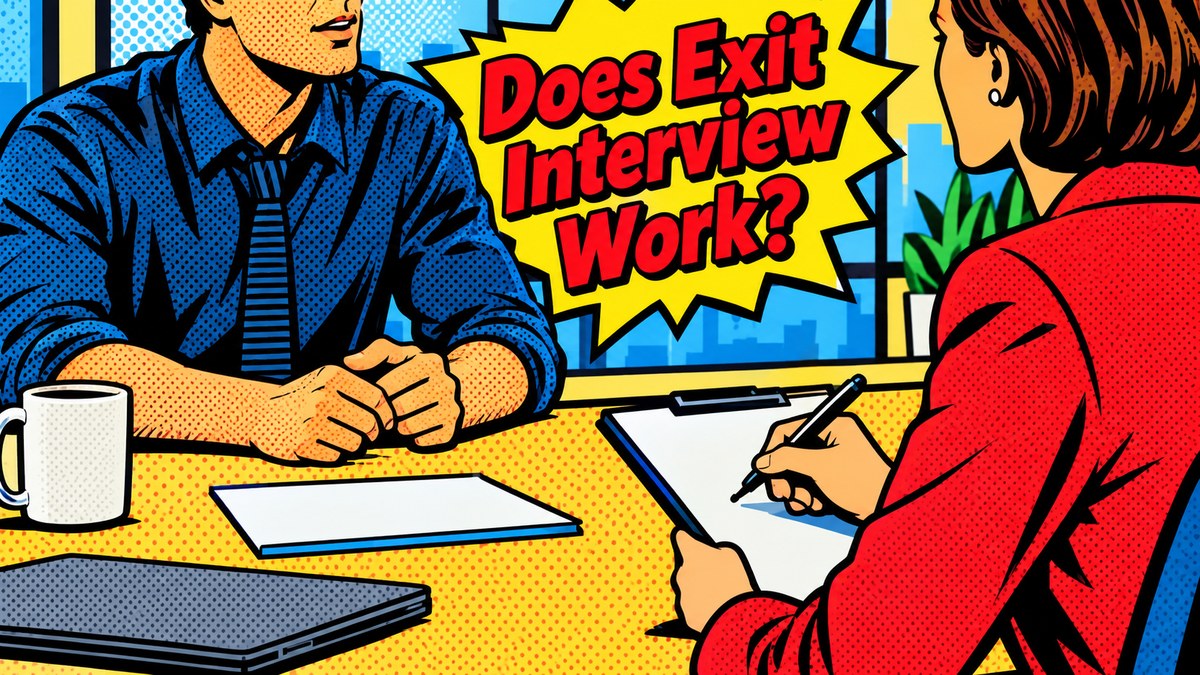
Three months before that morning, I had sat through an exit interview.
I chair a body corporate committee in Wellington, and we had given our management company 90 days’ notice. The operations manager asked for a meeting to understand why we were leaving and what the company could do better. It was a courteous conversation. They took notes, they thanked me for being direct, and they said the feedback would go to the owner. They also said, in the politest possible way, that we would regret it. The market would show us what good service actually costs, and they intended to use the notice period to prove the company had changed.
So I had 90 days to watch that claim get tested. That is a longer measurement window than any interview, and a harder one to fake, because it is the one stretch of time where a supplier has every incentive to perform and no commercial reason left to bother.
Long story short, I saw no improvement. It got worse. Invoices went unpaid. Follow-ups stopped. The transition itself was the worst part: the incoming provider came back to us with a list of missing documents and gaps in the records, the service address for the building was still registered to the outgoing company, contracts we had instructed them to cancel were still running, and nothing had been forwarded on. We had grounds to seek compensation. We decided chasing it would cost us more time than fixing the mess ourselves, so we fixed the mess ourselves.
Every promise made in that room was meant, I think. The operations manager simply had no mechanism to deliver any of it.
The version of this I wrote in 2022
I first wrote about exit interviews in October 2022, on a blog called Small Simple Steps. That blog has since closed, and its readers were pointed here. I haven’t migrated the old posts, and I don’t intend to migrate them as they were, because most of them were written by someone who still had an employer and still wrote like it. This one is worth reopening with more context behind it, because I have now been on both sides of the same ritual.
The 2022 version was about employees. Someone resigns, HR schedules a 45-minute conversation in their final week, and asks what could have been done differently. My friends, asked in private, told me it was a waste of time for three separate reasons: they knew nothing would be implemented, they didn’t want to say out loud that their manager was the problem, and they didn’t want to burn a bridge they might need. I concluded then that the concept was sound and the execution was poor, and that regular one-on-ones were the better instrument.
I’d now put it harder. The problem sits in the design.
Where the feedback goes
In 2012 and 2013, Everett Spain and Boris Groysberg surveyed 188 executives and interviewed 32 senior leaders, who between them represented 210 organisations in 33 industries, and published the findings in Harvard Business Review in 2016. About 75% of those companies ran exit interviews in some form, and 71% of them handed the process to HR. Spain and Groysberg think the instrument can be made to work, and their fix is to have a second-line manager run the interview, someone far enough from the day-to-day to hear the real thing and senior enough to act on it. Their own number puts the job with HR in 71% of those organisations. HR is the one function that can’t act on what it hears without exposing who said it.
HR runs it because HR is neutral, and neutrality is what makes the departing person willing to speak. The same confidentiality that makes someone willing to say the real thing also makes what they say unusable. The specific complaint, the one that names a manager and a pattern and a date, is exactly the part that cannot be passed on without identifying who said it. So it gets aggregated, anonymised, softened, and summarised into a quarterly theme like “career development opportunities.” Across banks, a tax department, a statistics agency, and two tertiary institutions, I have never once seen a manager receive the substance of what a departing team member said about them. Ask your own manager whether they have ever been shown one.
And suppose it did reach them. A line manager holds very little of the machinery that makes people leave. They don’t set the salary bands, they don’t set the promotion criteria, they don’t control headcount, and they don’t own the restructure timetable. Even training, the smallest and most obvious thing a departing person asks for, runs on financial delegation: budget ownership generally starts at senior manager and above, so if you hold no budget and no financial delegation, and most line managers hold neither, you write a training proposal and send it up to your own manager to spend the department’s money, and in some organisations HR co-approves it on top of that. Handing that person a well-argued piece of exit feedback is like handing someone a detailed engineering report on a data centre they don’t own.
There is your one analogy for the piece. I’ll keep the rest literal.
The promise made to the people who stay
This is the part I didn’t see clearly in 2022.
The exit interview carries a second message, and its audience is everyone still in the room. It says: we collect feedback, we take it seriously, and things will get better. It’s the same promise the operations manager made to me, delivered with the same sincerity, backed by the same absence of machinery.
Watch what happens after a wave of resignations in any organisation you’ve worked in. Exit interviews are conducted. An engagement survey follows. A working group forms. Twelve months later, the people who stayed have watched the identical conditions produce the identical outcome, and they’ve learned something the organisation never intended to teach them: that saying the true thing out loud changes nothing, and the safe play is to stop saying it. High turnover alongside diligent exit interviewing is a company that has industrialised the appearance of working on its problems.
You were never their kind of customer
Here’s the uncomfortable half.
Organisations are calibrated for a particular kind of employee and a particular kind of customer: the one who fits the existing process, doesn’t escalate, doesn’t ask for exceptions, and doesn’t make anybody rewrite anything. That person is cheap to serve and easy to manage, and by the organisation’s own measures they are a good employee and a good client. If you are the one sitting in an exit interview with substantive feedback, you have already demonstrated that you are not that person.
Which means the simplest reading of my 90 days is that the management company was letting us go, and the exit interview was the polite form of the goodbye. The feedback probably did reach the owner. The owner probably read it and concluded that a body corporate committee with an engaged chair who checks invoices and follows up cancellations is more trouble per dollar than the other buildings on the books that never ring. That is a rational commercial judgement. It just isn’t the one the meeting pretended to be about.
This is why most businesses are average. Not failing, not good, average. Average is an equilibrium; businesses settle there and stay. The organisations we read about in the business books are a rounding error, and even they don’t hold it. Nike spent nearly 18 years in the S&P 100 and came out of it on 21 September 2026, with its market capitalisation down from roughly $264 billion to about $57 billion, a fall of around 78%, and revenue down 10% to $46.3 billion in the 2025 financial year. Nobody stays great. Mostly, nobody even tries for very long, because average is comfortable and it pays the bills.
What’s actually left
I’m not going to tell you to give better exit feedback. The instrument doesn’t work, the person receiving it can’t act, and by the time you’re in the chair you’ve already been reclassified as somebody’s acceptable loss.
But the last line of my own thinking on this hasn’t changed, and it’s the one that matters: improvement doesn’t require a policy change or a budget. Almost everything a manager can do for the people in front of them is free. A one-on-one that is never cancelled. Thirty minutes that isn’t a status update. Asking what someone wants in three years and then remembering the answer. Telling your own manager, in writing, what your team told you, while they’re all still employed. None of that needs sign-off, and all of it happens inside the autonomy a line manager already has.
Be clear about the limits of it. That fixes your team. It will not fix the organisation, and you should stop expecting the organisation to be fixable by anyone at your level. Do it anyway, because the people in front of you are real and the organisation is an abstraction.
As for the feedback itself, I’ve learned the timing from both chairs. On the committee, I now say the difficult thing to a supplier while the contract still has years to run and my opinion is still worth something to them. As an employee, I should have said it in month four rather than in the exit interview.
I say it while I’m still the customer.
Correction, 24 September 2026: the paragraph on Spain and Groysberg’s research has been corrected. The first version said they surveyed 188 executives across 210 organisations; they surveyed 188 executives and interviewed 32 senior leaders, who together represented 210 organisations. It also left out that the authors conclude exit interviews can work when a second-line manager runs them. Thank you to the reader who pointed this out.