It’s been a month since we moved into the new place. We’re still renting, and the floor area is bigger than the last house, though it has 3 rooms where the old one had 4, and less storage than we had before. We’ve settled and unpacked almost everything. The boxes I brought up from Wellington in 2022, 16 of them were unopened if I remember right, are down to 6, repacked with the things we don’t need to use yet. By any normal measure the move is done.
Then my wife went on a spree. Donating, selling online, giving things away as freebies. I thought she was taking minimalism to the extreme, and I said so. She pointed back at something I’d told her earlier, which she hadn’t agreed with at the time: we’re paying rent for these things to be with us. We’re tenants. Every square metre of the house has a weekly price on it, and the box of things nobody uses pays the same rent as the couch. They were wants once upon a time, most of them.
The list
So I made a list, and the list is long.
The toboggan went first, the snow sled we bought for my daughter when she was younger, for our first trip to Whakapapa on the flanks of Mt Ruapehu in Tongariro National Park, where we tried our best to enjoy the snow. The snow pants went with it. We sold both in the New Zealand winter, which is exactly when somebody else wants a toboggan.
Then shoes, and here I learned something. Shoes can disintegrate sitting in a box. It’s called hydrolysis: moisture in the air slowly breaks down the polyurethane in the sole, over several years, whether you wear the shoes or keep them in storage for the right occasion. The sole cracks, or the material starts to fray. Those went into the dumpster, and a fair number of handbags went with them. You realise, eventually, that nobody needs that many handbags.
Winter clothing was simple once we noticed the pattern. We keep wearing our favourites, winter after winter, and the rest hangs there. The unworn ones were sold.
The kitchen was the big one. When the movers packed us up for Hamilton in 2022, one of them looked around our kitchen and said we had every kitchen appliance going except one: we didn’t have a hangi cooker. Lucky, we never got round to that. This month the rest went. The electric pressure cooker, the coffee maker, the soy milk maker, the blender, the food processor, the mixer, a new wok, pots, plates, cutlery and utensils, sold online or given away. Every one of them was a good idea the day we bought it.
The old mobile phones, the older electrical appliances and the electronics went to the recyclers, where they can be disposed of properly. The technical books on IT, Agile, Lean and process went. Some furniture went to people who’ll have more use for it than we do. And the lawn mower and the trimmer have gone too, because the new place has no lawn at all.
Why the buckets stopped working
During the packing rush, deciding was easy. I wrote about the three buckets in Knowledge is Cheap Now, and with a moving truck booked they do their job, because the deadline makes the call and there’s no time to argue with yourself. Now there’s no deadline. Nothing has to be gone by Friday, so every object gets to make its case again, and the case it makes usually sounds reasonable.
So we changed the question. We look back over the last 12 months and ask whether we used it. If we haven’t, it has no utility for us, and it goes.
Each thing we keep costs us attention. It’s one more thing to remember we own, to maintain, to store, to move next time, to notice on a shelf and feel faintly guilty about. Once we asked the question that way, the other arguments stopped carrying much weight. Some things sold for decent money and some went for nothing, and what we’d paid didn’t change a single decision; the thing still has utility for somebody who needs it, and they’ll pay what it’s worth to them. We have more floor than we used to, so space wasn’t forcing anything either. Every time, it came back to the same three reasons for keeping something: emotional value, utility, or money. We tried to name which one we were really leaning on.
Compare that with a car. A car has upkeep too. You service it, maintain it, pay the insurance, and you do it without a second thought, because the car gives you convenience and the long drive, which for us is the trip to Auckland every few weeks to see our daughter, one of the real pleasures of this stage of life. The soy milk maker had upkeep and gave us nothing back. Morgan Housel has a name for this in The Art of Spending Money: negative returns, the things you pay for that quietly make life worse, his example being the boat that always needs something done to it. Our kitchen cupboards were full of small boats.
Housel’s book kept coming back to me while we did this, because it pushed me to the less comfortable question. Why did we buy these things in the first place? Because we could afford them and we were able to buy them. Buying something with your own hard-earned money is a small hit of happiness, and at the time each one looked like a good idea as well. A pressure cooker is a promise to cook more slow food. A toboggan is a promise of more snow trips. Every purchase was a guess about the life we were about to live, and a few years later a lot of those good ideas turn out to have been wishful ones, things we thought we might use and ended up not using, and we’d been paying to keep them close ever since.
Did we regret any of it?
Not really. I’ve asked myself frankly, and so has my wife. I guess most of it was already out of our minds before it left the house; out of sight, out of mind, and it stayed that way. We can recall things we sold or gave away, but there hasn’t been a moment where one of us wished we’d kept something because we need it now. When one of us does think of something, we ask whether there’s an alternative, and whether we need it or only want it.
My wife is heading towards minimalism faster than I ever expected. Somewhere in the middle of her spree, I did what I’ve learned to do when two people see the same thing differently, at work or at home. I asked her: what is your lived experience, that I haven’t lived, that makes you believe in what you’re doing?
She said nothing. I took the silence to mean she was thinking, and I left it as it was.
The answer came later, and it didn’t come to me in words. She was telling her sisters and her mother what she’d been getting rid of and why, repeating the idea back as though she’d thought of it first, when she’d disagreed with it the first time I said it. Her action said everything the silence hadn’t. That’s when I knew she’d taken it seriously.
It’s a powerful question, because it makes both people step back and find the extra information they were missing, and that makes more difference than any argument. Once you’ve found it, some of the rules you’ve been living by, rules built out of your own past, stop holding. That’s what happened with her disposing, and as it turned out, it happened with me too.
We enjoy the simplicity of how we live now, and it doesn’t take many things. So we’re letting go of what we thought we’d want and value, sentimentally or practically, once it’s clear it doesn’t fit the life we actually have.
What’s still worth carrying
When you’ve accumulated a lifetime of things, the useful question at this end of it is what’s still worth carrying.
For me it’s a short list. My journals and notes, and anything that helps me write here. And a very old book I found in my collection: The Complete Sherlock Holmes, the Hamlyn edition from 1984. I’m keeping it because reading those stories and watching the reruns on TV aren’t the same thing.
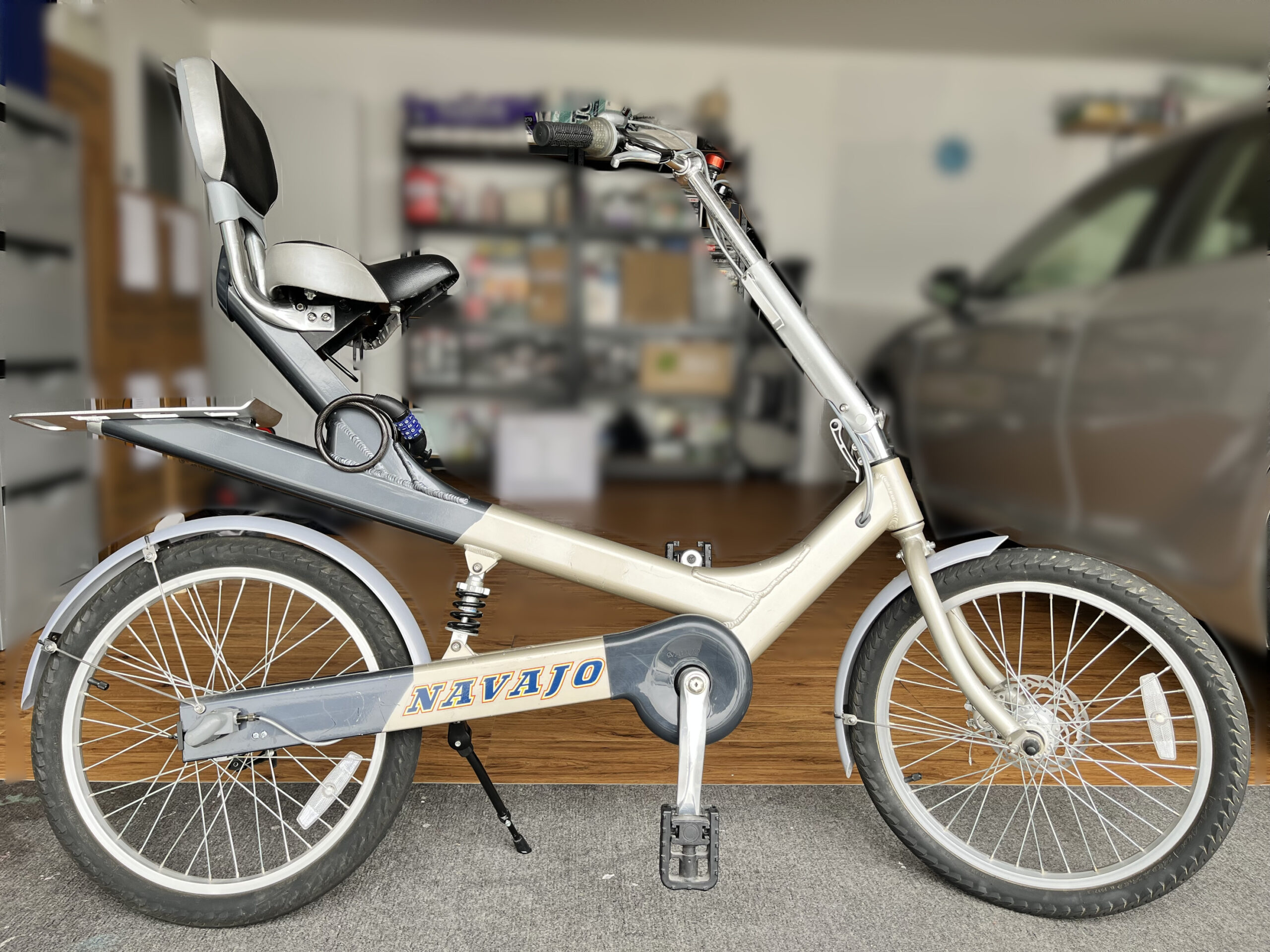
Then there’s the bicycle.
It’s a Navajo, and it looks something like a cruiser, with a seat that has a proper backrest, a shock absorber under the frame and a 3-speed hub gear, and I’ve kept it for many years. It’s the one in the photo at the top of this piece. It has outlasted the others: the Avanti Discovery 8 I serviced myself and sold on TradeMe in 2011, and the folding bicycles I gave away. I find it unique in how it looks, the hub gear is useful, and I enjoy riding it. Maintenance is low, and I’ve always done my own. I think it’s the right bike for Hamilton, and I can already picture riding it along the river path beside the Waikato, just enjoying being outdoors.
My wife wants it gone.
Here’s the uncomfortable part, and I’d rather say it myself than have a reader point it out. By the rule I’ve spent this whole piece describing, the bicycle fails. The straight answer to the 12-month question is no. My entire case for keeping it is about rides I’m going to take, and a few paragraphs up I called that exact argument a wishful idea when it belonged to a soy milk maker. I held every cupboard in the house to the rule and let my own bicycle off.
What this month has taught me is that the utility argument, however rational it is, loses to some things. They carry an emotional weight that no 12-month rule reaches, and when that’s true I’d rather admit it than keep insisting the rule holds. And on this one I have a piece of lived experience my wife hasn’t lived yet. The minute I start riding that bicycle regularly, she’ll want one too, so she can ride along.
Ask me again in 12 months.